Losing a customer costs businesses $29 today—triple what it was a decade ago. Acquiring a new customer? That’s five times more expensive than keeping an existing one.
Customer retention separates sustainable businesses from those constantly scrambling to replace churned customers. When you retain customers, you’re creating advocates who spend more, stay longer, and bring referrals.
This guide covers what customer retention means, how to measure it, and which strategies work. You’ll get formulas, benchmarks, and tactics to turn one-time buyers into lifelong customers.
Key Takeaways:
- Customer retention measures your ability to keep customers over time, directly impacting profitability and growth
- A 5% increase in retention can boost profits by 25% to 95%, making it one of the most cost-effective growth strategies
- Retention rates vary dramatically by industry, from 55% in hospitality to 86% in commercial insurance
- Successful retention requires tracking multiple metrics beyond just retention rate, including CLV, churn rate, and repeat purchase rate
Customer Retention Meaning and Definition
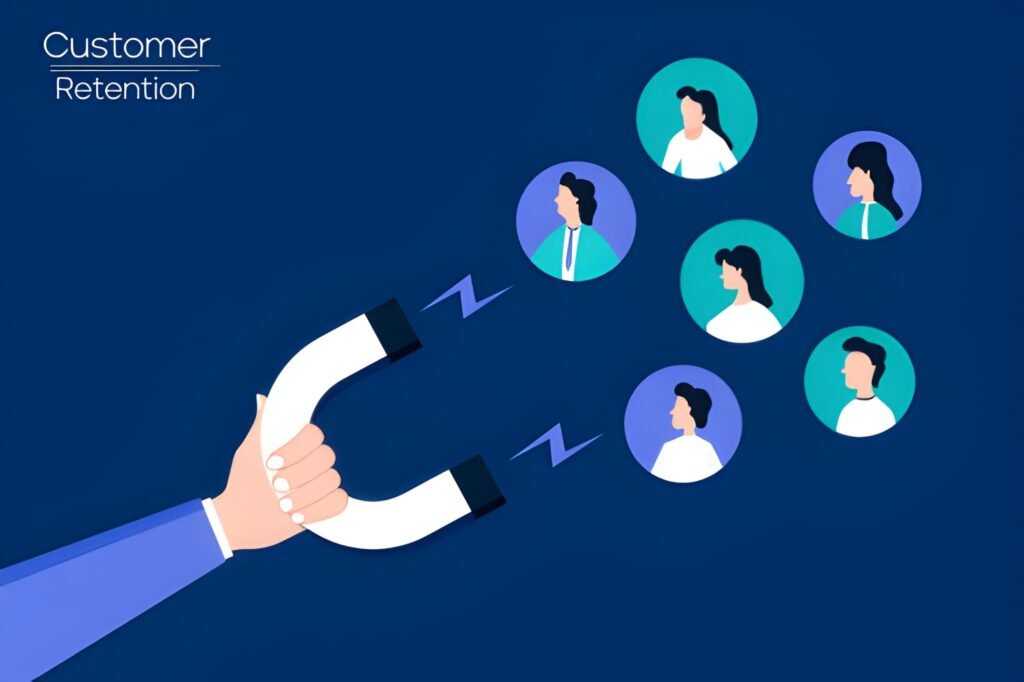
Customer retention is your business’s ability to keep customers coming back over time. It measures how well you maintain relationships with customers you’ve already acquired.
The concept sits at the intersection of customer satisfaction, product value, and strategy. Retained customers continue buying from you, renewing subscriptions, or engaging with services rather than switching to competitors.
What Is Customer Retention
Customer retention captures whether your customers stick around after their first purchase. A high retention rate signals that you’re delivering consistent value, meeting expectations, and building trust. Low retention? That’s your business bleeding revenue and signaling deeper problems with your product, service, or customer experience.
Think of retention as proof that your business model works beyond the initial sale. Anyone can convince someone to try something once. Keeping them? That requires delivering on promises, solving real problems, and creating experiences worth returning to.
Customer Retention vs Churn
Retention and churn are opposites. Your retention rate shows what percentage stayed. Your churn rate reveals what percentage left. Together, they equal 100%.
If you retain 85% of customers, you’re churning 15%. Retention gets you thinking about growth. Churn keeps you focused on losses. Companies obsessing over retention build loyalty programs. Companies chasing churn spend energy plugging leaks.
This relationship determines growth trajectory. High retention with controlled churn builds stable foundations. Growing becomes easier because you’re adding to a solid base, not constantly replacing losses.
Summary: Customer retention measures how many customers stay with your business over time, reflecting the value and satisfaction you deliver. It’s the inverse of churn and serves as a primary indicator of business health and growth potential.
Why Customer Retention Is Important
Retention drives profitability in ways that acquisition never can. The numbers tell the story: companies focusing on retention are 60% more profitable than those prioritizing acquisition. That’s not a small edge—that’s the difference between thriving and surviving.
Financial Impact of Customer Retention
The cost comparison is stark. Acquiring new customers costs five times more than retaining existing ones. You pay for ads, sales team time, promotions, and discounts just to get someone through the door once. Retention focuses on delivering value to people who already trust you.
Repeat customers spend 67% more than first-time buyers. They know your products, trust your brand, and don’t need convincing. The probability of selling to existing customers is 60-70%, compared to just 5-20% for new prospects.
A 5% increase in customer retention can boost profits 25% to 95%. That’s transformational growth from your existing base.
Customer Retention and Satisfaction
Retention starts with satisfaction but goes deeper. Satisfied customers might come back once or twice. Retained customers? They’re committed. They’ve experienced your value repeatedly and chosen you over alternatives.
The link between customer service and retention is direct: 60% of customers say good service is key to retention. When customers face issues and you solve them quickly, you’re not just fixing problems—you’re proving you’ll be there when they need you.
Experience matters more than ever. Recent data shows 44.5% of organizations now use customer experience as their primary competitive differentiator. And it works: customers with positive past experiences spend 140% more than those with negative experiences. Your CX isn’t a nice-to-have department—it’s your retention engine.
Customer Retention Statistics
Real numbers from 2025: losing a customer costs businesses $29 on average. A decade ago? Just $9. The cost of churn has tripled.
The average business keeps 75% of customers, varying by industry. Media companies lead at 84% retention. Hospitality struggles at 55%. Your benchmark depends on your sector, but even small improvements translate to massive revenue gains.
Fifty-nine percent of consumers stay loyal to brands for life once committed. But 32% leave after one bad experience. The stakes are high, margins thin, and deliberate retention strategies more urgent than ever.
Customer Retention vs Customer Acquisition
Both matter. Both drive growth. But they work differently, cost differently, and require completely different approaches.
Strategic Comparison
Customer acquisition brings fresh revenue and expands market reach. It’s essential for growth, especially early on. Without it, you have no business.
Customer retention creates stability and predictable revenue. It maximizes value from customers you’ve already paid to acquire. Retention turns your base into a compounding asset rather than a leaky bucket.
Acquisition focuses on getting people in. Retention focuses on keeping them engaged and spending. Acquisition uses content marketing, SEO, paid ads, and outreach.
Retention centers on customer success, loyalty programs, personalized communication, and service.
Your stage determines focus. Early companies need acquisition to build a base. Established businesses with high churn need to fix retention before pouring money into acquisition.
The ideal? Balanced approaches where acquisition feeds a retention machine maximizing customer lifetime value.
Customer Acquisition vs Customer Retention Comparison:
| Factor | Customer Acquisition | Customer Retention |
| Cost | 5x more expensive | More cost-effective |
| Focus | New customers | Existing customers |
| Timeline | Short-term conversions | Long-term relationships |
| Success Rate | 5-20% probability | 60-70% probability |
| Revenue Impact | Immediate but unstable | Compounding and stable |
| Strategies | Content, ads, SEO, outreach | Customer success, loyalty, service |
| Measurement | CAC, conversion rate, new customers | Retention rate, CLV, churn rate |
Both strategies require deep customer understanding and resource investment. But retention usually delivers higher ROI because you’re marketing to people who’ve already proven they value what you offer.
How to Measure Customer Retention Rate
You can’t improve what you don’t measure. Customer retention rate gives you a precise, actionable number that reveals how well you’re keeping customers over time.
Customer Retention Rate Meaning
Your customer retention rate (CRR) shows the percentage of customers you kept over a specific period, excluding any new customers acquired during that time. It isolates your retention performance by focusing solely on whether the customers you started with are still with you at the end.
A high retention rate means customers find ongoing value in what you’re offering. They’re not just satisfied—they’re committed. Low retention signals problems: poor product-market fit, weak customer service, better alternatives, or unmet expectations.
Customer Retention Rate Formula
The standard retention rate formula is straightforward:
Customer Retention Rate = [(E – N) / S] × 100
Where:
- E = Number of customers at the end of the period
- N = Number of new customers acquired during the period
- S = Number of customers at the start of the period
The formula subtracts new customers because you want to measure how many original customers stayed, not how well you’re acquiring new ones. That’s a different metric entirely.
How to Calculate Customer Retention Rate
Work through a practical example. Measuring retention for Q1:
- Started January 1st with 1,000 customers (S)
- Ended March 31st with 1,100 customers (E)
- Acquired 200 new customers during quarter (N)
Calculation: CRR = [(1,100 – 200) / 1,000] × 100 CRR = [900 / 1,000] × 100 CRR = 90%
You retained 90% of original customers. The 10% who left represent churn. Together, they tell the complete story.
Measure retention over any timeframe—weekly, monthly, quarterly, or annually. SaaS companies with rapid fluctuations might track daily or weekly. B2B businesses with longer cycles typically measure quarterly or annually.
Average Customer Retention Rate by Industry
Industry benchmarks give context for your performance. Where sectors stand in 2025:
Top Performers: Commercial Insurance (86%), Business Consulting (85%), IT & Managed Services (83%), Media & Professional Services (84%)
Mid-Range: Banking (75%), Retail (63%)
Lower Performers: E-commerce (63%), Hospitality (55%)
Leaders benefit from high switching costs, long-term contracts, and deep relationships. Hospitality and e-commerce face constant price competition and lower switching barriers.
For SaaS, companies typically retain 35% of customers, though top performers hit 90%+ through customer success and product value.
Track your baseline and measure improvement over time. A climbing 65% retention rate beats a stagnant 75%.
Key Customer Retention Metrics and KPIs
Retention rate alone doesn’t give you the full picture. You need a suite of metrics that reveal different aspects of customer behavior and business health.
Core Customer Retention Metrics
Retention Rate measures what percentage of customers stayed over a period. It’s your headline number—the metric that tells you if your retention efforts are working.
Repeat Purchase Rate shows the percentage of customers who made more than one purchase. Calculate it by dividing customers who purchased multiple times by total customers. For non-subscription businesses, this metric reveals whether customers found enough value to return.
Customer Lifetime Value (CLV) estimates the total revenue you’ll earn from a customer throughout your entire relationship. It’s calculated by multiplying average purchase value by purchase frequency and average customer lifespan. CLV tells you how much you can afford to spend acquiring and retaining customers while staying profitable.
SaaS Customer Retention Metrics
SaaS businesses need specialized metrics that account for subscription revenue models.
Gross Revenue Retention (GRR) measures the percentage of revenue retained from existing customers, excluding any expansion revenue. It shows pure retention without growth.
Net Revenue Retention (NRR) includes expansion revenue from upgrades and upsells. An NRR above 100% means your existing customers are growing their spending faster than others are churning. Top SaaS companies target an NRR of 120% or higher.
Expansion Revenue tracks additional revenue from existing customers through upgrades, cross-sells, or increased usage. It’s proof that your product delivers increasing value over time.
Customer Retention Metrics Summary:
| Metric | Formula | What It Measures |
| Retention Rate | [(E-N)/S] × 100 | % of customers retained |
| Churn Rate | (Lost Customers / Start Customers) × 100 | % of customers lost |
| Repeat Purchase Rate | Repeat Customers / Total Customers | % who bought more than once |
| CLV | Avg Purchase Value × Purchase Frequency × Avg Lifespan | Total customer value |
| Net Revenue Retention | (Start MRR + Expansion – Churn) / Start MRR × 100 | Revenue retention + growth |
Track these metrics together. Retention rate shows the big picture. CLV reveals profitability. Repeat purchase rate indicates product-market fit. Together, they guide your retention strategy.
Cost of Customer Retention
Understanding what you spend to keep customers helps you optimize your retention budget and compare it to acquisition costs.
Customer Retention Cost Definition
Customer retention cost represents the total amount you spend keeping existing customers engaged, satisfied, and active. This includes customer success teams, loyalty programs, support infrastructure, retention marketing campaigns, and any discounts or perks offered to existing customers.
Unlike acquisition cost, which has a standard formula, retention cost varies based on your business model and retention approach. Some companies invest heavily in premium support and success teams. Others focus on automated loyalty programs and minimal intervention.
How to Calculate Customer Retention Cost
The basic formula for customer retention cost (CRC) is:
Customer Retention Cost = Total Retention Expenses / Number of Active Customers
Your retention expenses include:
- Customer success and support salaries
- Loyalty program costs and rewards
- Retention marketing campaigns
- CRM and customer engagement tools
- Training and onboarding resources
- Discounts and incentives for existing customers
Say you spend $100,000 annually on retention efforts and have 2,000 active customers. Your CRC is $50 per customer. Compare that to your customer lifetime value—if each customer generates $500 in profit, spending $50 to keep them is a smart investment.
The key comparison is retention cost versus acquisition cost. Most businesses find retention is one-sixth to one-seventh the cost of acquisition. Even if you invest more in retention than average, it’s still dramatically cheaper than constantly replacing churned customers.
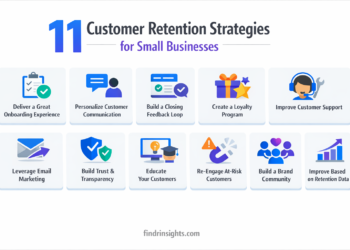
Customer Retention Strategies Explained
Strategies separate companies that accidentally retain customers from those that systematically build loyalty.
What Is a Customer Retention Strategy
A customer retention strategy is your systematic approach to keeping customers engaged, satisfied, and committed to your brand over time. It’s not random acts of customer service—it’s a planned framework that addresses every stage of the customer lifecycle.
Strong retention strategies anticipate needs, solve problems before they escalate, and continuously deliver value. They’re built on understanding why customers stay and why they leave, then creating systems and processes that maximize the former and minimize the latter.
Best Practices for Customer Retention
Onboard Customers Properly: First impressions set the foundation. Recent data shows 24% of regretful buyers cancel software contracts due to poor onboarding. Set clear expectations, provide training resources, and ensure customers see value quickly.
Deliver Exceptional Customer Service: Ninety percent of consumers say positive customer service makes them more likely to buy again. Your support team isn’t a cost center—they’re your frontline retention force. Fast response times, knowledgeable staff, and proactive problem-solving build the trust that keeps customers around.
Personalize Communication and Offers: Seventy-one percent of consumers expect personalized interactions, and 76% get frustrated when it doesn’t happen. Use customer data to tailor emails, recommend relevant products, and send timely offers that match individual needs and preferences.
Collect and Act on Feedback: Ask customers for their feedback through surveys, reviews, and direct conversations. But here’s the critical part: actually use that feedback to improve. Customers who see their suggestions implemented feel heard and valued—a powerful retention driver.
Customer Retention Tactics
Retention Marketing Campaigns: Send targeted emails celebrating milestones, offering exclusive deals to loyal customers, or re-engaging those who haven’t purchased recently. Email marketing remains effective, with 80% of businesses relying on it for retention.
Customer Retention Email Strategies: Segment your email list by customer behavior and lifecycle stage. New customers need onboarding sequences. Long-term customers appreciate VIP treatment and early access. At-risk customers might need special incentives to stay engaged.
Proactive Customer Success: Don’t wait for problems to arise. Regular check-ins, usage monitoring, and proactive outreach help customers succeed with your product before they consider leaving. This is especially critical in B2B and SaaS, where 73% of chief sales officers now prioritize existing customer growth.
Loyalty Programs and Customer Retention
Loyalty programs give customers tangible reasons to keep choosing you over competitors.
Impact of Loyalty Programs on Customer Retention
The loyalty program market is massive—projected to hit $28.65 billion globally by 2030. Why? Because they work. Seventy-five percent of consumers favor brands offering rewards programs, and 95% of companies report that loyalty members spend more than non-members.
The behavioral impact is straightforward: loyalty programs incentivize repeat purchases. The emotional impact runs deeper: they make customers feel recognized and valued, creating psychological commitment beyond just transactional benefits.
Companies increasing personalization in loyalty programs see up to 10% growth in customer retention. The key is making rewards relevant, achievable, and valuable enough to influence behavior.
Loyalty Program Types
Points-Based Programs are the most common structure. Customers earn points for purchases, which they redeem for discounts, free products, or exclusive perks. Starbucks Rewards exemplifies this model—every dollar spent earns stars, which unlock free drinks and food.
Tiered Loyalty Programs create levels of membership with increasing benefits. Entry-level members get basic perks. Higher tiers unlock premium rewards like free shipping, dedicated support, or early access to new products. This structure encourages increased spending to reach better tiers.
The most effective programs combine clear value with simplicity. Seventy percent of consumers join paid loyalty programs for free shipping, and 60% want instant discounts. Make the path to rewards obvious, the benefits meaningful, and the experience frictionless.
Customer Retention Tools, Software, and CRM
Technology scales retention efforts that would be impossible manually.
CRM Customer Retention
Customer relationship management systems centralize customer data, track interactions, and automate retention workflows. A good CRM shows you which customers are at risk of churning, when to reach out, and what message to send.
The global CRM market is projected to hit $163 billion in 2026, driven largely by retention needs. Seventy-three percent of sales leaders use shared CRM tools to align sales and customer success teams, creating seamless handoffs and coordinated retention efforts.
CRMs help you segment customers by behavior, lifetime value, and engagement level. You can trigger automated emails when usage drops, schedule check-ins with high-value accounts, and track the impact of retention campaigns.
Customer Retention Platforms and Tools
Beyond CRM, specialized retention platforms offer advanced features like predictive churn analysis, automated engagement workflows, and integrated loyalty program management.
These systems monitor customer behavior patterns, flag warning signs of disengagement, and recommend interventions.
The best platforms integrate with your entire tech stack—email, support, billing, and product analytics—giving you a complete view of each customer relationship.
Automation is critical for scale. You can’t manually monitor thousands of customers. Retention software handles the heavy lifting, letting your team focus on high-touch relationships and strategic improvements.
Customer Retention by Business Model
Different business models face unique retention challenges and opportunities.
SaaS Customer Retention Strategies
SaaS retention hinges on continuous value delivery. Customers can cancel anytime, so your product must consistently solve problems and justify its cost.
Focus on customer success rather than just support. Assign success managers to high-value accounts, monitor product usage to identify struggling customers, and proactively support them in achieving their goals. Companies with dedicated customer success teams see significantly higher retention.
Net Revenue Retention (NRR) is your critical SaaS metric. Top-performing SaaS companies maintain NRR above 120%, meaning existing customers grow their spending faster than others churn. Achieve this through expansion revenue: upsells, cross-sells, and increased usage.
B2B SaaS specifically benefits from longer contract terms, integrated solutions, and high switching costs. Build features that become mission-critical for clients’ operations. The deeper you integrate into their workflows, the stickier you become.
E-Commerce and Retail Customer Retention
E-commerce faces intense competition and low switching costs. Customer retention requires standing out through experience, convenience, and value.
Subscription Models dramatically improve e-commerce retention. When customers subscribe to regular deliveries, retention becomes automatic until they actively cancel. Amazon Prime demonstrates this perfectly—subscription members are far more loyal than occasional shoppers.
Personalized Recommendations based on purchase history keep customers engaged. If you know someone buys organic coffee monthly, remind them when it’s time to reorder and suggest complementary products they’ll actually want.
Shopify Customer Retention can be enhanced through loyalty app integrations, abandoned cart recovery, and email marketing automation. The platform’s ecosystem offers tools specifically designed to keep customers coming back.
Customer Retention Examples
Real-world examples show how leading companies turn retention theory into practice.
Customer Retention Strategy Example
SaaS Example: Slack focuses on team-wide adoption as their retention strategy. They offer free plans to get teams started, then create value through integrations, shared channels, and workflow automation.
Once a team builds their work processes around Slack, switching becomes painful. Their NRR consistently exceeds 130% because expanding teams naturally upgrade to paid plans.
E-Commerce Example: Sephora’s Beauty Insider program is masterclass in retention. Members earn points on purchases, get birthday gifts, access exclusive sales, and receive personalized product recommendations.
The tiered structure (Insider, VIB, Rouge) encourages increased spending to unlock better perks. Beauty Insider members drive a significant portion of Sephora’s revenue because the program makes staying more valuable than switching.
Both examples share common elements: precise value delivery, friction in switching, and rewards for continued engagement. They don’t just retain customers—they create advocates.
Customer Retention vs Customer Loyalty
Retention and loyalty look similar but represent different levels of commitment.
Retention and Loyalty Compared
Customer Retention is behavioral. Customers keep buying from you because you meet their needs at acceptable price and quality. They’re satisfied enough not to leave, but they’re not necessarily committed.
Customer Loyalty is emotional. Loyal customers actively prefer your brand over alternatives. They’re willing to pay more, overlook occasional issues, and recommend you to others. Retention is about not leaving. Loyalty is about choosing you enthusiastically.
You can have retention without loyalty. Customers might stay because switching is inconvenient, not because they love you. That’s brittle retention—vulnerable to any competitor who removes friction.
The goal is building both. Start with retention by delivering consistent value. Build loyalty by exceeding expectations, creating emotional connections, and giving customers reasons to care about your success. Loyal customers are your retention safety net—when problems arise, they give you chances to make things right instead of immediately churning.
Summary: Customer Retention as a Growth Strategy
Customer retention isn’t defensive—it’s your most powerful growth lever. Companies that increase retention by just 5% see profit increases of 25-95%. That’s transformational growth from your existing customer base.
The math is undeniable: retention costs 5x less than acquisition, retained customers spend 67% more, and the probability of selling to existing customers is 12x higher than selling to new prospects. When you retain more customers, every marketing dollar goes further because you’re building on a stable foundation rather than constantly replacing churned customers.
Effective retention requires measurement, strategy, and execution. Track your retention rate alongside CLV, churn rate, and repeat purchase metrics. Build systematic strategies around onboarding, customer service, personalization, and loyalty. Use technology to scale what works.
The businesses winning in 2025 aren’t just acquiring customers—they’re building retention machines that turn first-time buyers into lifetime advocates. That’s how you build sustainable, profitable growth in an increasingly competitive market.
Frequently Asked Questions
Why Is Customer Retention Important in Business?
Customer retention drives profitability more efficiently than acquisition. It costs five times as much to acquire a new customer as to retain one, and retained customers spend 67% more than new customers.
A 5% increase in retention can boost profits by 25-95%. Retention creates predictable revenue streams, lowers marketing costs, and increases customer lifetime value—making it essential for sustainable business growth.
Why Customer Retention Is Important in Business?
Beyond cost savings, retention creates compounding growth. Retained customers become brand advocates who refer new customers at no cost to you. They’re more receptive to upsells and cross-sells.
They provide valuable feedback for product improvement. Most importantly, they create business stability—predictable revenue lets you invest in growth rather than constantly fighting churn.
What Is Customer Retention Cost?
Customer retention cost is the total expense of keeping existing customers engaged and active, divided by the number of active customers.
It includes customer success salaries, support infrastructure, loyalty program costs, retention marketing, and any discounts or incentives for existing customers.
Most businesses find retention costs are one-sixth to one-seventh of acquisition costs, making it a highly efficient investment.
What Customer Retention Rate Is Good?
A reasonable retention rate varies by industry. Commercial insurance and business consulting lead at 85-86%, while hospitality and e-commerce average 55-63%. The overall business average hovers around 75%.
However, focus on your specific industry benchmark and your own improvement trajectory. A 65% retention rate that’s climbing is better than a stagnant 75%. Top-performing companies in any industry aim for retention rates above 90%.
What Is a Customer Retention Specialist?
A customer retention specialist focuses exclusively on keeping existing customers engaged and reducing churn. They analyze customer behavior patterns, identify at-risk accounts, implement retention campaigns, and coordinate with customer success teams. Their role combines data analysis, strategic planning, and customer relationship management. They measure success through retention rate, CLV, and reduced churn—directly impacting company profitability and growth.