The best candidates aren’t scrolling job boards waiting for your post. They’re already employed, performing well in their current roles, and not actively job hunting.
In competitive talent markets where unemployment stays low and demand for skilled professionals outpaces supply, waiting for applications to arrive doesn’t work.
Talent sourcing strategies solve this fundamental problem by building genuine relationships with high-potential candidates before you need them, creating talent pipelines that consistently deliver qualified candidates exactly when critical roles open up. Instead of reacting to last-minute resignations, you’re preparing months in advance.
This comprehensive guide covers 15 proven sourcing strategies that work in today’s market, explains what sourcing means within your broader talent acquisition framework, and shows which specific approach fits different hiring scenarios you’ll encounter throughout your recruiting career.
What You’ll Learn:
- Sourcing finds candidates proactively before positions open; recruiting manages the full hiring process after candidates apply and express interest
- Strategic sourcing aligns with business objectives and builds talent pipelines that reduce time-to-hire and cost-per-hire metrics
- Different hiring scenarios require different sourcing approaches: high-volume hiring needs automation, while executive searches need relationship networks and confidentiality
- Technology and AI enable modern sourcing efficiency and scale, but human judgment determines cultural fit and final hiring decisions
What Is Talent Sourcing?
Talent Sourcing Definition and Scope
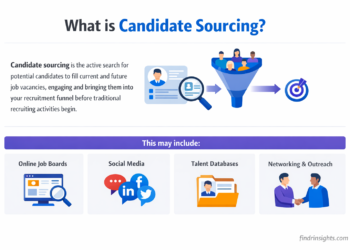
Talent sourcing is the proactive process of identifying and engaging potential candidates before you need to fill a specific role. Instead of waiting for applications after posting a job description, you actively hunt for the right people, build relationships over time, and keep them warm for when opportunities arise in your organization.
The fundamental difference between proactive and reactive hiring defines your entire approach to talent. Reactive hiring starts when a position opens and ends when someone accepts an offer. Proactive sourcing runs continuously: you’re constantly scanning for talent, even when your headcount is full and your team appears stable.
Research from Paychex’s 2025 Priorities for Business Leaders study demonstrates this advantage: businesses with proactive recruiters who leverage HR automation and AI-assisted recruiting fill positions faster, reduce costs, and improve hiring efficiency. You’ve already completed half the work before the job requisition lands on your desk.
This approach creates predictable hiring outcomes. When you’ve built robust talent pools for your most common roles, you’re not starting from scratch every time someone quits or your team expands to accommodate growth.
What Is a Talent Sourcing Strategy?
A talent sourcing strategy is your systematic, repeatable plan for finding and engaging candidates. It goes beyond “check LinkedIn when we’re hiring someone” to deciding which channels to prioritize based on data, how to engage different candidate types, when to make contact, and how to measure what works versus what wastes time and resources.
This strategic approach means thinking months ahead rather than days ahead. You analyze which roles you’ll need based on business growth plans and historical turnover patterns. You identify where ideal candidates spend their time online and offline. You build processes and systems that scale as your company grows.
Core building blocks of a sourcing strategy include channel selection logic, candidate engagement sequences, clear qualification criteria, measurement frameworks, and smooth handoff processes to recruiting teams. Without these foundations in place, you’re throwing resumes at hiring managers without direction.
Talent Sourcing vs Talent Acquisition: Key Differences
Talent Sourcing vs Talent Acquisition Explained
Understanding how sourcing fits within the broader hiring ecosystem clarifies its relationship. “Talent acquisition” is the umbrella term covering everything from employer branding and workforce planning to candidate experience and new hire onboarding.
Sourcing is one critical piece of that larger puzzle, specifically the piece focused on finding people and getting them interested in your organization and opportunities.
According to the Society for Human Resource Management’s 2025 Recruiting Executives report, sourcing and recruiting strategy rank as two of the top priorities for recruiting executives this year.
Organizations that clearly separate these functions and specialize team members accordingly reduce time-to-fill by up to 40% through increased efficiency and sharper focus on specialized skills.
Without strong sourcing feeding your funnel, your acquisition strategy runs dry the moment inbound applications slow down or stop.
How They Interlock Across the Hiring Funnel
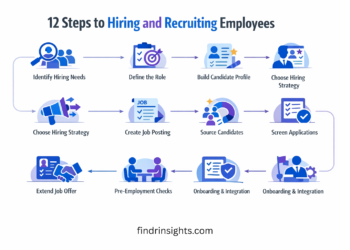
Sourcing happens at the very top of your hiring funnel, creating initial awareness of your company and generating early-stage interest in potential opportunities. Recruiting takes over once someone enters your formal candidate process: submitting applications, completing assessments, attending interviews, receiving offers, negotiating terms.
| Aspect | Talent Sourcing | Talent Acquisition |
| Scope | Finding and engaging candidates | Complete end-to-end hiring process |
| Timeline | Ongoing and proactive | Episode-based and role-specific |
| Focus | Building robust talent pools | Filling specific open positions |
| Candidate Type | Primarily passive candidates | Both active and passive candidates |
What Talent Management Strategy Is Based On
Talent management strategy starts with workforce planning. You look at business growth signals (new market expansion, major product launches, strategic expansion plans) and translate those strategic moves into specific hiring needs with realistic timelines.
Research confirms sourcing and recruiting strategy directly support workforce planning objectives.
You can’t execute an ambitious business strategy without the right people in the right roles at the right time.
Your talent strategy becomes either your competitive constraint or your competitive advantage.
Skills forecasting matters more than ever in rapidly changing markets. Technology evolves fast.
The technical skills you needed last year might be partially obsolete today with new frameworks and platforms emerging constantly.
You’re continuously evaluating business decisions to determine which new capabilities your organization needs to develop internally or acquire externally next.
Succession planning feeds directly into long-term sourcing strategy. When you know your senior engineer is planning to retire in 18 months, you start building relationships with potential replacements today, not 17 months from now. You’re not scrambling when they hand in their notice.
Strategic foundations of talent management strategies:
- Business growth objectives translated into specific headcount needs and hiring timelines with quarterly checkpoints
- Comprehensive skills gap analysis identifying future capability requirements across all teams and departments
- Competitive market intelligence about talent availability, salary expectations, and common hiring challenges in your industry
- Historical retention data showing which roles need constant pipeline attention versus occasional hiring cycles
- Realistic budget constraints determining feasible hiring volume and comfortable sourcing spend limits
Core Principles Behind Effective Talent Sourcing Strategies
1. Business Alignment: Alignment with business objectives comes first. Your sourcing priorities should directly mirror company strategic priorities. If engineering velocity drives growth, that’s where you invest time building deep pipelines. If customer success determines retention rates and expansion revenue, you’re sourcing support talent.
2. Candidate-First Engagement: This approach fundamentally changes outcomes. You’re not blasting people with generic, templated InMails. You research their published work, understand their career goals based on their trajectory, and offer opportunities that advance their professional development.
3. Data-Backed Decision Making: This separates consistently good sourcers from occasionally lucky ones. You track which channels produce quality candidates, which outreach message styles get responses, and which sourcing strategies deliver the best cost-per-hire.
According to the 2025 Future of Talent Acquisition Report, only 5% of organizations consider their TA strategy world-class, while 51% still rely on reactive hiring, largely because they’re not using data to optimize approaches.
4. Scalability and Consistency: These matter as you grow. What works when you’re hiring five people annually won’t work when you’re hiring fifty due to rapid expansion. You need documented systems and proven processes, not just heroic individual efforts from your best recruiter.
5. Continuous Experimentation: Testing new approaches against established control groups measures improvement and drives innovation in your sourcing practice.
15 Talent Sourcing Strategies Every Recruiter Should Know
The following strategies organize into three categories based on their primary approach: relationship-based strategies that leverage personal networks, technology-driven approaches that use platforms and automation, and market intelligence methods that rely on competitive analysis and data.
Relationship-Based Strategies
1. Employee Referral Programs
Employee referral programs tap into a simple professional reality: your current employees know other talented professionals in their field who share similar skills and work styles. This network effect explains why employee referrals reduce time-to-hire and improve long-term retention rates, since referred candidates already understand company culture before they interview.
Build a referral program that motivates widespread participation across all departments. While cash bonuses remain popular, consider diversifying your incentive mix with extra paid vacation days, public recognition programs at company meetings, or charitable donations made in employees’ names to causes they support. Whatever incentives you choose, make the submission process streamlined and keep employees updated on their referrals’ application status to maintain engagement throughout the hiring cycle.
Track which specific employees generate the best referrals consistently over time, because certain individuals maintain extensive professional networks packed with top performers. Cultivate these particularly valuable relationships with your strongest referrers through personalized recognition and ongoing communication.
2. Internal Talent Rediscovery
Your existing applicant database represents candidates you’ve already invested resources to source and evaluate. Past applicants who didn’t get hired for previous roles might be perfect for different current positions, while silver medalists (the candidates who came in second place) often accept offers immediately because they’re already pre-sold on your company culture and mission.
Research from iCIMS demonstrates that silver medalists provide quick access to backfill critical positions. These candidates have already been vetted, understand your culture, and showed interest previously.
Build organized talent communities using your applicant tracking system capabilities. Segment candidates by relevant skills, experience level, and documented reasons why they weren’t originally selected, which allows you to search your existing database efficiently before spending money on external sourcing campaigns when new roles open.
3. Events, Meetups, and Industry Conferences
Face-to-face interactions build stronger relationships than digital outreach alone. Industry conferences put you in rooms with hundreds of potential candidates who care enough about their craft to invest time and money attending.
Rather than simply sponsoring events, participate meaningfully by hosting workshops, speaking on panels, or organizing networking sessions. This active involvement builds your reputation as an industry leader, which makes future outreach more credible when you contact attendees afterward.
Virtual events expanded during the pandemic and continue to offer valuable sourcing opportunities through webinars, online workshops, and virtual career fairs that let you reach candidates globally without travel costs.
Technology-Driven Approaches
4. LinkedIn Boolean and Advanced Search
LinkedIn remains the dominant professional network, but most recruiters barely scratch its surface capabilities. Boolean search functionality lets you combine keywords with logical operators like AND, OR, and NOT to find exactly the people you need with precision.
Instead of searching just “software engineer,” you search “software engineer AND (Python OR Java) NOT manager” to exclude management roles, then layer on filters by years of experience, geographic location, company size, industry sector, and dozens of other relevant factors to narrow your results to highly qualified prospects.
LinkedIn Recruiter adds more search power through InMail messaging credits, advanced filters unavailable in basic search, and saved searches that alert you when new matching profiles appear in the network.
5. Niche Job Boards and Professional Communities
General job boards like Indeed cast wide nets attracting massive volumes. Niche specialized boards target specific communities: GitHub for software developers, Behance for creative designers, HealthcareJobsite for medical professionals, AngelList for startup talent seeking equity opportunities. Because these focused platforms attract people passionate about their specific craft, you face less competition and connect with candidates genuinely interested in your exact domain.
Professional communities on Slack, Discord, and Reddit work even better for targeted sourcing because you’re not just posting jobs but participating in conversations, building professional reputation, and becoming known as the company that understands the field’s nuances and challenges.
6. Social Media Talent Sourcing
MSH Recruitment Trends data shows that 92% of recruiters use social media platforms for sourcing. But most use it poorly by simply posting jobs and hoping for responses. Smart social sourcing means meeting candidates where they already engage with platform-appropriate content strategies.
Twitter works well for tech and startup talent who share insights publicly. Instagram suits creative roles with visual portfolios. TikTok reaches Gen Z candidates who consume content differently. Each platform requires different content approaches: thought leadership on Twitter, behind-the-scenes culture content on Instagram, day-in-the-life videos on TikTok.
Across all social channels, showcase real employees doing actual work that matters rather than relying on stock photos and corporate speak that feels inauthentic to your target audience.
7. AI and Automation in Talent Sourcing
AI-powered tools can screen thousands of profiles in minutes, identify patterns in successful hires, and automate initial outreach sequences. MSH data shows AI-powered screening can reduce time-to-hire by up to 75%.
The optimal division of labor assigns AI to repetitive tasks like parsing resumes, scheduling interviews, and sending follow-up messages while reserving human judgment for relationship building, assessing cultural fit, and making final decisions.
Start with workflow automation for one part of your process, such as outreach sequences, candidate status updates, or interview scheduling. Once you gain comfort and identify what works, gradually expand to more sophisticated applications.
Market Intelligence and Strategic Methods
8. Passive Candidate Outreach
According to LinkedIn’s research, 83% of recruiting professionals identify engaging passive candidates as a critical skill for the next five years. Given that passive candidates comprise roughly 70% of the global workforce, this emphasis reflects practical necessity rather than aspirational thinking.
Passive candidates aren’t unhappy enough to actively job hunt, but they’re open to hearing about the right opportunity at the right time. Effective outreach respects this mindset by leading with what makes this particular opportunity unique, not generic company descriptions. Mention specific interesting projects they’d work on, meaningful problems they’d solve, or valuable new skills they’d develop.
Keep initial contact messages short and focused on requesting a brief exploratory conversation rather than demanding a full resume immediately. Plan three strategic touchpoints over three weeks, then move on if there’s no response rather than following up desperately beyond that window.
9. Long-Term Talent Pipeline Development
Research from Lever shows that advanced recruiters build detailed candidate personas based on anticipated future hiring needs, then continuously source for those specific profiles rather than waiting for formal requisitions to arrive. This mirrors how sales teams manage pipelines by constantly filling the top of the funnel to ensure consistent conversion downstream.
Start by analyzing business growth plans with senior leadership. If you’re launching a new product line in six months, you’ll need specific engineering skills then, which means you should begin building relationships with those particular engineers now.
Pipeline development means staying in touch over time through sending relevant industry articles, congratulating people on accomplishments, and checking in quarterly. When the role eventually opens, you’re continuing an existing relationship rather than cold-calling strangers.
10. Diversity-Focused Candidate Sourcing Strategies
Diverse teams outperform homogeneous ones across virtually every metric, but you won’t build diversity by accident. You need intentional strategies specifically targeting underrepresented groups.
Partner with organizations serving diverse professionals, such as professional associations for women in tech, networks for LGBTQ+ professionals, and organizations supporting candidates with disabilities. These communities provide access to talented people your competitors aren’t reaching through traditional channels.
Review your job descriptions for unconsciously biased language that discourages applications. Terms like “aggressive” or “rock star” statistically discourage some candidates from applying. Use gender-neutral language and focus on actual job requirements rather than vague “culture fit” criteria that often perpetuate homogeneity.
Source from non-traditional educational backgrounds, recognizing that not everyone follows the Ivy League to Big Tech pipeline and that alternative routes often produce exceptional talent with diverse perspectives.
11. Campus and Early Career Sourcing
NACE’s Job Outlook 2025 survey shows hiring for the graduating Class of 2025 is expected to increase 7.3% over previous year, with 87% of employers recruiting in fall 2025. Early career talent brings fresh perspectives and enthusiasm, even without extensive experience.
Given this competitive landscape, campus recruiting requires year-round engagement rather than only appearing at career fairs in October with branded swag. Sponsor student competitions, host workshops teaching relevant skills, and offer summer internships that serve as extended interviews where both sides evaluate fit.
Alumni networks from target schools provide warm introductions. Your existing employees who graduated from specific universities can personally connect you with their former professors or current student organizations.
12. Talent Pools and CRM Systems
Candidate Relationship Management systems function like CRM systems for sales teams by tracking every interaction, automating follow-ups, and ensuring no potential candidate falls through the cracks.
Segment your talent pools by role type, skill level, and current engagement status. Provide each segment with tailored content and customized outreach cadences, since senior engineers require different nurture strategies than entry-level marketers based on their experience level and career stage.
According to iCIMS research, 68.6% of employers source primarily through job boards, but companies using CRM systems to nurture talent pools reduce time-to-hire significantly by converting cold leads into warm prospects over time rather than starting fresh with each requisition.
13. Employer Branding as a Sourcing Strategy
Strong employer brands make sourcing easier by creating pre-existing awareness and interest before you ever reach out to candidates. When people already understand your mission and culture, they’re evaluating alignment with their values during your initial contact, which increases response rates and shortens your engagement cycle.
Your employer brand lives everywhere: career site, social media, review sites like Glassdoor, and how current employees talk about you publicly in their networks. Showcase real employee stories, highlight career development opportunities, and be transparent about challenges alongside wins.
According to industry data, 88% of candidates say employer branding influences their decision to apply. Companies with strong brands also see 50% reductions in cost-per-hire because candidates come to them proactively.
14. Freelance and Contract Talent Networks
Freelance and contract talent provide flexibility, specialized skills for specific projects, and potential conversion to permanent roles after you’ve worked together successfully, which makes them valuable for roles that don’t require full-time employees with benefits.
Platforms like Upwork, Toptal, and specialized networks for your industry make finding contractors easier. Beyond immediate project needs, you’re also building relationships with people who might become full-time employees once they experience how your company operates and the opportunities available.
Contract-to-hire arrangements reduce risk for both parties: candidates can test your culture without quitting current jobs while you evaluate their work before making permanent offers.
15. Data-Driven and Analytics-Based Sourcing
Korn Ferry’s 2026 TA Trends Report reveals that 84% of talent leaders will use AI in 2026. But 73% rank critical thinking as their #1 recruiting priority above AI skills, reflecting the understanding that technology amplifies good judgment rather than replacing it.
Track metrics that matter: source of hire, time-to-fill by channel, candidate quality scores, and conversion rates at each funnel stage. Analyze this data to double down on channels and tactics producing results while eliminating approaches that waste resources.
Predictive analytics can forecast which candidates are most likely to accept offers, which sourcing channels will produce the best candidates for specific roles, and when you’ll need to start sourcing based on historical hiring patterns.
Matching Sourcing Strategies to Role Complexity:
- High-volume, entry-level roles: Employee referrals, job boards, campus recruiting, automation
- Mid-level specialized roles: LinkedIn search, niche communities, social media, talent pools
- Senior/executive roles: Executive search firms, passive outreach, industry events, internal promotion
- Hard-to-fill technical roles: Niche boards, GitHub sourcing, contract-to-hire, competitive talent mapping
Candidate Sourcing Strategies by Hiring Scenario
High-Volume and Rapid Hiring Needs
When you’re hiring dozens or hundreds of people quickly, you need strategies that scale. Employee referrals with accelerated bonuses incentivize fast submissions from your team. Job board aggregators distribute your posting across multiple platforms simultaneously for maximum reach. Assessment-first hiring lets candidates self-select by completing skills tests before interviews, filtering out unqualified applicants early.
Automation becomes non-negotiable at scale because manually reviewing thousands of applications while maintaining quality standards creates impossible bottlenecks. AI screening tools, chatbot initial engagement, and automated scheduling keep your pipeline moving efficiently.
Specialized and Hard-to-Fill Roles
Rare skills require creative sourcing approaches. Competitive intelligence (mapping where your competitors’ employees work) reveals talent pools you’re competing against directly. Talent mapping in adjacent industries finds people with transferable skills who might welcome a change or new challenge.
Build long-term relationships even when you’re not hiring currently. The senior blockchain developer you need might work remotely or require relocation, which means cultivating relationships with potential candidates well before you have an immediate opening.
Executive and Leadership Hiring
Executive searches run differently from standard recruiting because you’re conducting confidential searches through retained search firms or internal executive recruiters with specialized networks rather than posting jobs publicly. Board connections, industry relationships, and executive networks matter more than LinkedIn for these sensitive roles.
Succession planning for leadership should start years early, not months. You’re identifying high-potential internal candidates and grooming them for advancement while building external relationships as backup options.
| Scenario | Primary Strategies | Timeline |
| High-Volume Hiring | Referrals, job boards, automation | 2-4 weeks |
| Specialized Roles | Niche boards, competitive mapping, passive outreach | 8-12 weeks |
| Executive Hiring | Search firms, board networks, succession planning | 3-6 months |
Talent Acquisition Sourcing Strategy Framework
Building a Scalable Sourcing Strategy for Talent Acquisition Teams
Your framework starts with planning inputs: business growth forecasts, historical hiring data, and skills gap analysis. You’re testing assumptions before committing significant resources.
Channel selection logic follows a simple rule: go where your candidates are, not where it’s easiest for you. If your target candidates don’t use LinkedIn actively, stop wasting time there. Find the Discord servers, Slack groups, or subreddits they actually use daily.
Measurement alignment means tracking metrics your leadership cares about. Source of hire matters to you, but executives want to know time-to-productivity and quality of hire. Connect sourcing metrics to business outcomes.
Common Strategic Errors That Undermine Sourcing
Relying on single channels creates vulnerability because when job boards change their algorithms or LinkedIn raises prices substantially, your entire sourcing operation collapses without diversified alternatives.
Ignoring passive candidates leaves 70% of the talent market untapped. Active candidates are easier to engage initially, but passive candidates often deliver better quality and longer retention.
Treating sourcing as a start-and-stop activity rather than continuous pipeline development means you’re always starting from zero, which costs more in both time and money than maintaining proactive systems.
Talent Sourcing Strategy Template
Step-by-Step Talent Sourcing Strategy Template
Step 1: Role and Skills Definition Document exactly what you’re looking for: required skills, preferred experience, must-have qualifications versus nice-to-haves. Include day-one responsibilities and six-month expectations to ensure alignment between sourcing and hiring manager expectations.
Step 2: Channel Prioritization Rank sourcing channels by likelihood of finding qualified candidates. Allocate time proportionally: if LinkedIn produces 60% of your qualified candidates, spend 60% of your sourcing time there.
Step 3: Outreach Cadence Plan your engagement sequence with specific timelines: initial contact, follow-up after three days, final check-in after a week. Include what triggers movement to the next stage and when you disqualify unresponsive candidates to maintain pipeline velocity.
Step 4: Performance Tracking Define success metrics before you start. How many candidates do you need to source to fill one role? What’s your target response rate? How long should sourcing take for this role type?
Customizing the Template for Business Size and Industry
Startups source differently than enterprises. You’re selling vision and equity rather than stability and benefits. Tech companies compete for scarce technical talent using different approaches than retail companies hiring frontline workers.
Your employer brand strength determines channel selection. If you’re an unknown company, prioritize warmer introductions through referrals and events. If you’re an established brand, you can succeed with broader outreach because candidates already recognize your name.
Template Block:
- Role: [Job title and level]
- Required Skills: [List 3-5 must-haves]
- Ideal Candidate Profile: [Experience level, background, motivations]
- Primary Channels: [Top 3 sourcing channels with rationale]
- Outreach Approach: [Message framework and engagement sequence]
- Success Metrics: [Qualified candidates, response rates, time-to-fill]
- Budget Allocation: [Dollar amounts or time allocation per channel]
How Talent Sourcing Supports Long-Term Talent Management Strategies
Sourcing functions as pipeline insurance against unexpected departures and growth opportunities. When you maintain 20 qualified candidates warm in your pipeline, losing a key employee doesn’t trigger panic because you’ve already done half the replacement work.
The link between sourcing and retention is stronger than most realize. Candidates sourced through relationships and long-term engagement understand your culture better before joining, which means they’re less likely to experience reality shock and quit within the first year.
Succession and workforce continuity depend on continuously identifying potential leaders and building relationships with them well before immediate need arises. You’re always scanning for the next generation of talent who can grow into strategic roles as your organization matures.
Metrics That Measure Talent Sourcing Success
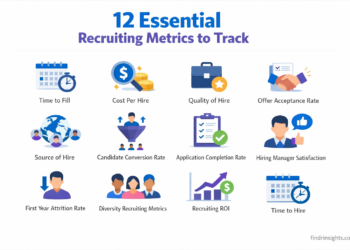
Time to Source tracks how long it takes to identify qualified candidates for a role. Benchmark this against industry standards and your own historical data to measure your sourcing efficiency and identify improvement opportunities.
Source of Hire reveals which channels produce the best candidates. Track not just who got hired, but their performance and retention, because the cheapest source isn’t valuable if those candidates underperform or quit quickly.
Candidate Quality Indicators include hiring manager satisfaction scores, new hire performance ratings at 90 days, and percentage of candidates who pass each screening stage. Quality matters more than quantity.
Cost Efficiency measures spending per qualified candidate and total cost per hire broken down by sourcing channel. This reveals where you’re getting the best return on investment.
Core Sourcing KPIs Recruiters Track:
- Qualified candidates per hour sourced (productivity metric)
- Candidate response rate to initial outreach (engagement effectiveness)
- Sourced candidate offer acceptance rate (quality and fit indicator)
- Sourced candidate 90-day retention rate (long-term success measure)
- Cost per sourced hire compared to other channels (efficiency benchmark)
Frequently Asked Questions About Talent Sourcing Strategies
What Are Some Talent Sourcing Strategies Recruiters Use Most?
The most common strategies include employee referral programs, LinkedIn Boolean search, passive candidate outreach, and building long-term talent pools. According to research, 92% of recruiters use social media platforms while 68.6% rely on job boards. However, the most effective recruiters combine multiple approaches rather than depending on any single channel. They match strategies to role requirements by using campus recruiting for entry-level positions, executive networks for leadership roles, and niche technical communities for specialized skills.
What Is the Difference Between Talent Sourcing and Recruitment?
Sourcing focuses on identifying and engaging potential candidates before they enter your formal hiring process by building relationships with people who might not even be job hunting. Recruitment takes over once a candidate expresses interest, managing interviews, assessments, offers, and onboarding. According to SHRM research, organizations that separate these functions reduce time-to-fill by up to 25%. Sourcers are like lead generation specialists; recruiters are like sales closers. Both are essential, but they require different skills and approaches.
How Do Talent Acquisition Strategies Depend on Sourcing?
Talent acquisition is impossible without effective sourcing. Your acquisition strategy might prioritize diversity, speed, or quality, but all three depend on surfacing enough qualified candidates to choose from. If you can’t source qualified candidates, your entire acquisition strategy fails. According to the 2025 Future of TA Report, only 5% of organizations have world-class TA strategies, largely because 51% still rely on reactive approaches rather than proactive sourcing systems.
What Makes a Talent Sourcing Strategy Effective?
Effective strategies align with business objectives, use data to optimize channel selection, and maintain consistent candidate engagement. You’re not guessing which approaches work but measuring response rates, candidate quality, and conversion metrics. The best strategies balance short-term hiring needs with long-term pipeline development. According to Korn Ferry research, 84% of talent leaders will use AI in 2026, but 73% still prioritize critical thinking skills over technical capabilities because technology amplifies good strategy rather than replacing strategic thinking about where to find candidates and how to engage them.
How Do Candidate Sourcing Strategies Vary by Industry?
Tech companies emphasize GitHub, Stack Overflow, and technical community engagement. Healthcare organizations focus on professional associations, licensing boards, and clinical networks. Retail and hospitality rely heavily on job boards, walk-in applications, and referrals from frontline staff. Professional services firms recruit from alumni networks and campus relationships with target schools. Each industry has different talent availability, compensation norms, and candidate motivations. Your strategy should reflect where your industry’s candidates spend time and what motivates them to consider new opportunities.
Final Summary: Building a Sustainable Talent Sourcing Strategy
Talent sourcing strategies work best as integrated systems, not isolated tactics. You’re combining referrals with social media, passive outreach with talent pools, and automation with human relationship building. The specific mix depends on your roles, industry, and resources.
Strategic consistency beats sporadic excellence. Running employee referral programs only when you’re desperate doesn’t build sustainable pipelines. Maintaining continuous engagement across multiple channels ensures you’re never starting from scratch.
Long-term hiring resilience comes from infrastructure, not heroics. Build sourcing playbooks, document what works, train your team on proven approaches, and continuously refine based on data. That’s how you transform sourcing from a desperate scramble into a competitive advantage.
Key Takeaways Recap:
Proactive sourcing finds candidates before you need them. Strategic approaches align with business objectives and build long-term pipelines.
Effective strategies combine multiple channels, use data to optimize, and maintain consistent engagement.
Success requires balancing technology with human judgment, measuring what matters, and treating sourcing as continuous rather than episodic.
Organizations that master these fundamentals fill roles faster, hire better candidates, and build competitive advantages in talent-scarce markets.