A business idea is a solution to a specific problem that people will pay for. It combines four elements: a problem worth solving, a target customer who experiences that problem, a straightforward solution that addresses it, and a revenue model that sustains the business.
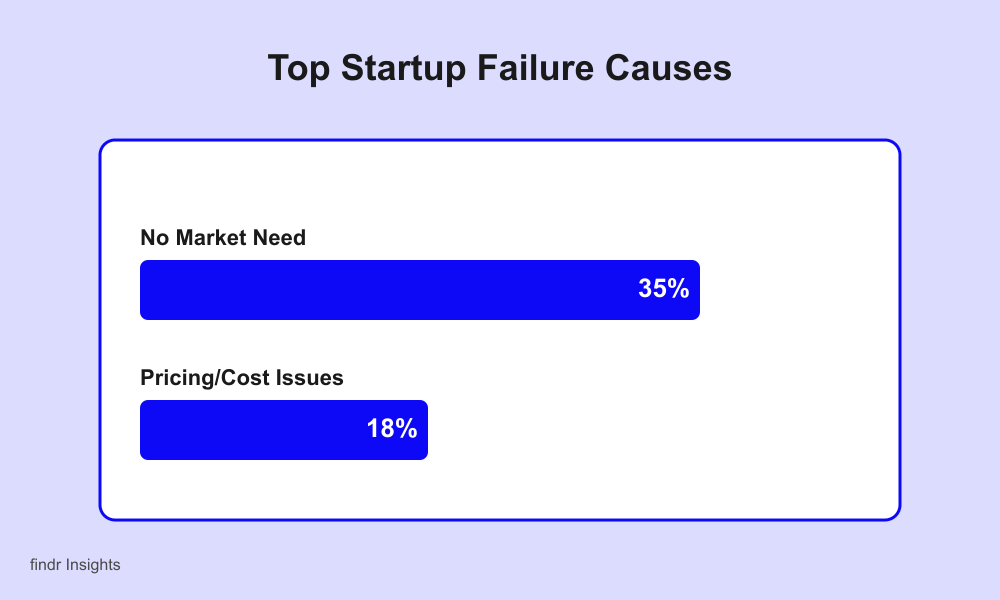
Most business failures stem from skipping validation. According to CB Insights, 35% of startups fail due to insufficient market need, and 18% fail due to pricing and cost issues, in which expenses exceed revenue.
The difference between a viable business and wasted effort comes down to whether your idea passes four tests: problem-solution fit, market demand, financial feasibility, and scalability.
Many aspiring entrepreneurs get stuck asking, “Is my idea good enough?” or “Where do I even start?” This guide breaks down what a business idea is, how to determine whether it’s worth pursuing, and how to turn that idea into a long-term business.
Defining a Business Idea
A business idea is the foundation of every company. It answers one key question: What problem are you solving, and for whom?
Simply put, a business idea is a solution people are willing to pay for. It could be a product, service, or experience that meets a specific need or makes life noticeably better.
Consider the businesses that have reshaped their industries. Airbnb turned unused living spaces into accommodations for travelers. Canva enables non-designers to create professional graphics in minutes.
They all started with the same principle: identifying a recurring problem that frustrates people and finding a better, more straightforward way to solve it.
Every business idea has four elements: a problem, a customer, a solution, and a revenue model. Think of it as the DNA of any successful venture.
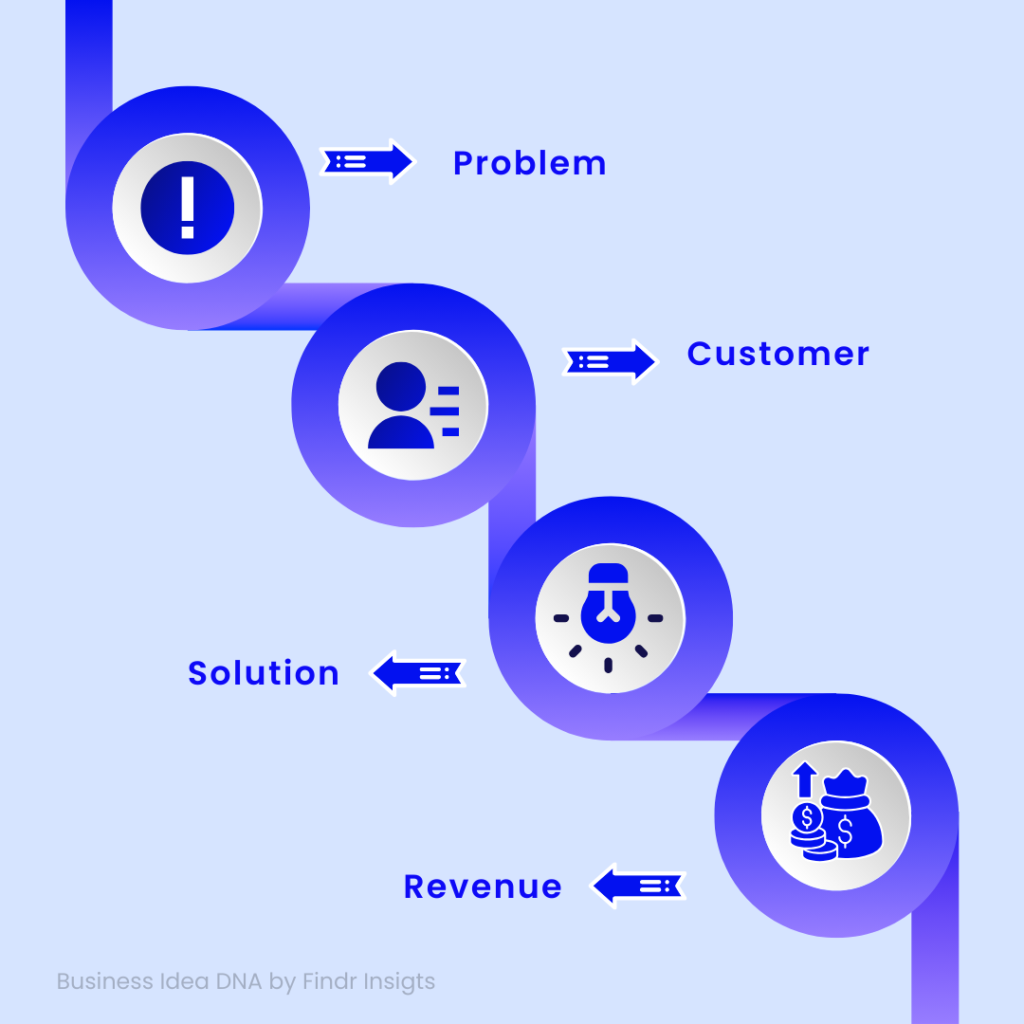
Take Uber, for example. They spotted a problem (unreliable taxis), identified the customer (urban commuters), built a solution (on-demand rides via an app), and defined the revenue model (per-trip commissions).
Without these elements, especially a clear audience and revenue model, the idea wouldn’t have been successfully executed.
A business idea works when your understanding of the problem aligns with what people need, what you can deliver, and what they’re willing to pay for.
Key Components of a Business Idea
Every great business idea is built from four core elements: a problem worth solving, a specific customer who feels that problem, a straightforward solution that genuinely helps, and a way to make money. These components work together like a system. If one fails, the entire system struggles.
Problem Identification
Most businesses start with frustration. A minor irritation that keeps recurring until someone decides to fix it. Great entrepreneurs pay attention to daily annoyances others overlook.
Maybe it’s noticing how food delivery always takes too long during lunch breaks or how renting short-term apartments feels complicated and expensive.
Airbnb’s founders saw travellers frustrated by high hotel prices and limited options, and then turned that gap into a global marketplace for spare rooms. You don’t need special skills to identify the right problem—just curiosity, observation, and empathy.
Target Customer
Once you know the problem, the next question is: Who bears the brunt of it? Not everyone will care, and that’s the point. A business idea succeeds when it zeroes in on who it serves.
Uber didn’t try to serve everyone who owned a car. It focused on urban dwellers and commuters who needed faster, more predictable rides. Similarly, fitness apps that help busy parents stay active succeed because they understand their audience’s daily pressures and limited time.
The clearer your picture of your customer’s life, habits, and frustrations, the easier it becomes to design a solution that fits naturally into their routine.
Solution
Once you understand the problem and the people you serve, the solution takes shape. It’s the connection between the problem and the person.
That solution might be tangible, such as a reusable water bottle designed to fit a car’s cup holder, or digital, such as an app that tracks home energy use and suggests cost-saving habits.
If you can’t explain what your business solves in one clear sentence, it becomes difficult to build customer trust and market effectively. Consider how Slack describes itself as “a messaging app for teams.” The value is instantly clear. The clearer you can tell your offer, the faster customers will trust and remember it.
Revenue Model
Even the most innovative solution won’t survive without a clear plan for revenue. Every business needs revenue to stay alive and grow. Whether that income comes from direct sales, subscriptions, affiliate partnerships, or ads, your revenue model determines sustainability.
Spotify addressed the high cost of music access by offering free streaming with ads, alongside premium subscriptions for ad-free listening. That dual model made the platform both accessible and profitable. The right revenue approach doesn’t have to be complex—it just needs to match how your customers prefer to pay.
RELATED: How to Come Up With Business Ideas: 12 Proven Methods for 2026
Three Critical Distinctions Every Entrepreneur Must Understand
New entrepreneurs often confuse three related but distinct concepts. Understanding the difference between them can save you months of wasted effort. Let’s break them down:
| Concept | What It Is | Key Question | Stage |
| Business Idea | The initial concept or vision | “What problem am I solving?” | Starting point |
| Business Plan | The execution roadmap | “How will I make this work?” | After validation |
| Business Opportunity | Validated, market-ready idea | “Will people actually pay for this?” | Ready to scale |
Business Idea vs Business Plan
A business idea is the foundation that defines what you want to create and why it matters. It’s the concept that captures your vision for solving a problem or meeting a need.
A business plan is the roadmap that explains how you’ll make that idea work. It outlines your strategy, including how you’ll reach customers, deliver your product or service, make money, and sustain growth. A business idea gives you direction, while a business plan shows you the path.
When Sara Blakely first imagined Spanx, her business idea was to create comfortable, flattering undergarments that solved the everyday frustration of visible panty lines. The plan came later, detailing how she would manufacture the product, price it affordably, and get it into stores while building brand recognition in a dominated industry.
The difference matters because many new entrepreneurs seek clarity through planning before their idea has been tested. You don’t need a forty-page business plan to know whether something’s worth pursuing. You need a clear, testable idea first. Once that idea shows promise, detailed planning becomes meaningful.
Business Idea vs Business Opportunity
A business idea is the starting point, while a business opportunity is that idea proven and ready to grow. The difference comes down to validation.
A business idea begins as a creative thought. It’s raw, full of promise, and untested. At this stage, you might be excited, sketching logos and brainstorming names. But until you confirm that people actually want it and would pay for it, it remains just an idea.
A business opportunity is a validated and actionable version of a business idea. It’s been tested, proven, and demonstrated real demand. It’s no longer just an interesting idea but something that can realistically generate revenue, attract customers, and scale.
History makes this distinction clear. Selling books online wasn’t unique to Jeff Bezos. What turned Amazon into an opportunity was recognising how internet access and logistics infrastructure had evolved enough to make it scalable. The idea wasn’t new, but the timing, execution, and validation were.
Think of it as a filtering process. Every business starts with many ideas, but only validated business ideas become opportunities worth pursuing. You test your assumptions, study the market, run small experiments, and measure the response. When customers consistently show interest with their words, time, or wallets, you’ve found your business opportunity.
Characteristics of Good Business Ideas
The best ideas share key traits. They’re relevant, realistic, and built to last. Understanding these characteristics helps you evaluate whether your idea deserves your time and resources.
QUICK CHECKLIST: Does Your Idea Pass the Test?
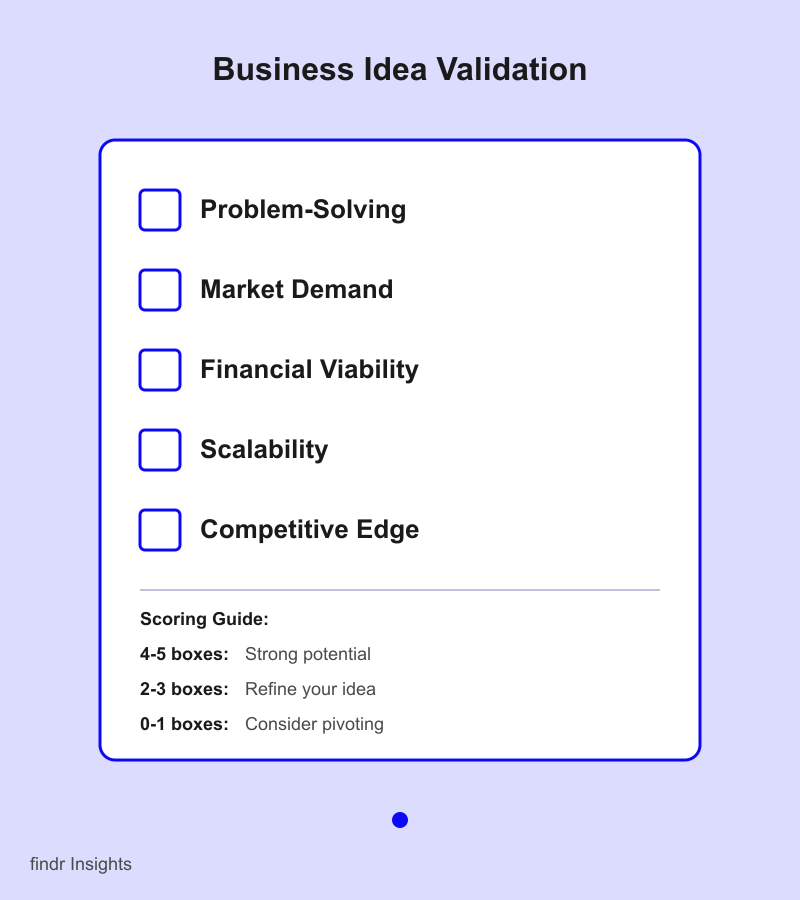
Use this checklist to evaluate your business idea before investing significant time or money:
- Problem-Solving: Does it solve a real, painful problem people currently face?
- Market Demand: Have at least 20 people outside your circle expressed interest?
- Financial Viability: Can you deliver it profitably at a price customers will pay?
- Scalability: Can you serve 10x more customers without 10x more work?
- Competitive Edge: What makes your solution different or better than alternatives?
If you checked 4-5 boxes, your idea has strong potential. If you checked 2-3, refine before proceeding. If you checked 0-1, consider pivoting to a stronger concept.
1. Solves a Real Problem
Every business exists to make something easier, better, cheaper, faster, or more enjoyable for someone. The problem creates the need. The solution gives the business purpose and value.
Uber solved the hassle of unreliable taxis. Airbnb turned expensive, impersonal hotels into a network of affordable homes. Even a local bakery that offers quick online ordering addresses the convenience needs of busy customers.
Strip away problem-solving, and an idea becomes just a product searching for a buyer. That’s where most new ventures fail. Entrepreneurs who start with “I want to sell X” often struggle. But when you start with “people need help with Y,” you tend to build things people actually want.
Solving a problem is the foundation that gives every other element direction and purpose.
2. Has Viable Market Demand
A business idea might sound exciting, but without enough demand, it can’t sustain itself. Demand proves that your solution matters beyond your own enthusiasm.
According to CB Insights, 35% of startups fail because there’s no market need for their product. You might create an innovative product, but if only a handful of people want it or aren’t willing to pay for it, you don’t have a business.
Meal delivery services validated massive market demand from busy consumers who valued convenience over cooking. That demand made the model scalable and profitable.
Market demand isn’t just about having an audience. It’s about having an audience that’s both interested and motivated to buy. Viable market demand connects your solution to a real, paying market, distinguishing it from what people like and what they’ll invest in.
3. Financially Feasible
A business might have a great product and viable demand, but if it costs more to produce, market, and deliver than it earns, it won’t last.
18% of businesses fail due to pricing and cost issues, indicating that profitability problems, such as costs exceeding revenue, are standard failure drivers. Financial feasibility ensures your idea can generate enough profit to sustain itself and grow. It’s where creativity meets economic reality.
You might have a fantastic idea for a handcrafted product, but if each unit costs $50 to make and customers only pay $40, the idea isn’t financially viable, at least not in its current form. Similarly, if your business depends entirely on expensive marketing campaigns but your profit margins are razor-thin, you’ll struggle to scale.
Financial feasibility doesn’t mean immediate profit. It means the numbers can eventually make sense. Your costs, pricing, and revenue potential must align to support sustainability. Software businesses often operate at a loss early on, but are financially feasible because their costs decrease as they scale.
When considering your business idea, treat the 18% as a warning flag: test your cost structure and pricing carefully before assuming that demand alone will ensure success.
4. Scalable
A good business idea needs to be scalable because it demonstrates it can grow beyond its initial stage without additional costs or effort, maintaining the same pace. Scalability means your business can serve more customers, enter new markets, or expand its offerings without losing efficiency or revenue.
A freelance graphic designer can only take on so many clients. That’s not scalable. But if that same designer creates design templates or launches an online course, they can sell those products to thousands of customers with minimal additional effort. The workload doesn’t scale with revenue.
Scalability matters because it determines how far your idea can go. Some businesses, such as local cafés or personal training services, can succeed without large scale, but even they can build scalable elements, such as online ordering or digital fitness programs.
When investors or experienced entrepreneurs evaluate an idea, scalability is often one of the first things they look for. It signals that the business can evolve and thrive in the long term.
5. Has a Competitive Advantage
Dozens of businesses often solve the same problem. What separates successful ones from the rest is their ability to do it better, faster, cheaper, or more meaningfully.
A competitive advantage gives your business a unique edge. It’s something that makes it hard for others to replicate your success.
This advantage can be a unique product feature, a lower cost structure, a better experience, stronger customer relationships, or a distinct brand identity. Apple’s advantage isn’t just technology but also its design, user experience, and brand loyalty.
Netflix’s early competitive edge was convenience, transforming entertainment from physical DVDs to on-demand streaming long before competitors caught up.
A business idea without a clear advantage is easy to copy, and once competitors enter your market, your profits shrink fast. But when your idea has something distinctive, such as a new approach, a patent, a community, or a customer experience, it becomes defensible. That’s what allows it to survive and grow even as new players emerge.
Key Insight: Having a competitive advantage goes beyond standing out. It’s about staying relevant. It ensures your business doesn’t rely solely on being “first” but on being different in a way that matters.
RELATED: How to Conduct Competitor Analysis for Business Planning in 15 Easy Steps
Types of Business Ideas
Now that you understand what makes a good business idea, let’s explore the different types of business ideas you might pursue. Understanding the kind you’re working with helps you make smarter decisions early on.
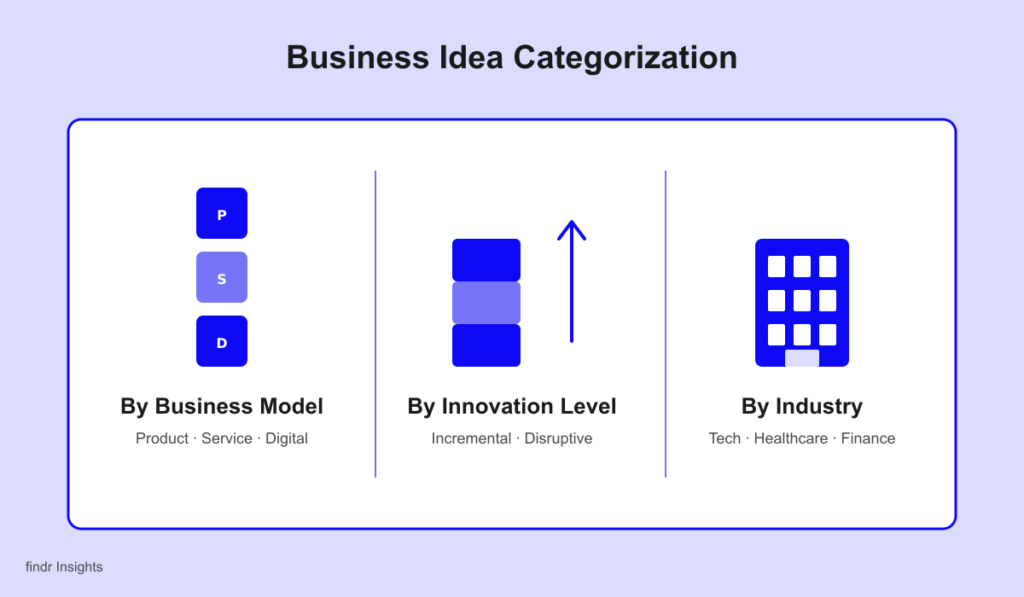
1. By Business Model
One of the simplest ways to categorize your idea is by how it creates value through products, services, digital offerings, or a mix of all three.
Product-based ideas involve selling physical goods, ranging from handmade jewellery and eco-friendly household items to tech gadgets or sustainable fashion. Companies like Yeti built thriving businesses by reimagining something as ordinary as a cooler, focusing on durability and premium design.
Service-based ideas are built around your time, expertise, or effort. If you’ve hired a freelance designer, personal trainer, or cleaning company, you’ve paid for a service-based model.
These ideas can start small and local, but often scale through systems and teams. A tutoring service that begins with one teacher can grow into an online education platform with hundreds of instructors.
Digital or online business ideas often combine creativity with technology. These include subscription apps, online courses, SaaS products, and digital downloads.
What makes them powerful is scalability. You build once and can sell endlessly. Tools like Canva or Notion started this way, with simple digital solutions that now reach millions globally.
Hybrid business models combine elements of two or more traditional business models to create multiple revenue streams or better serve different customer needs.
2. By Innovation Level
You can also think about business ideas in terms of how innovative they are. Some create entirely new things, while others improve, adapt, or capitalize on emerging trends.
New inventions are rare but transformative—the kind of ideas that open new markets altogether. The first smartphone wasn’t just an upgrade. It changed how humans interact with information. These ideas often require deep research, technical knowledge, and patience.
Improvements refine what already exists. They might simplify a process, enhance quality, or reduce cost. When Dyson reinvented the vacuum cleaner, the goal wasn’t to create a new category but to make an everyday product perform much better.
Market-gap ideas target unmet or underserved needs in a market. They identify segments or customer groups that existing companies ignore or inadequately serve and create products, services, or experiences specifically for them. The opportunity lies in filling that gap, capturing attention, and building loyalty where no strong solution currently exists.
Trend-based ideas ride cultural or technological waves. These can be powerful yet time-sensitive, such as the explosion of plant-based food brands or the rise of AI-powered writing assistants. Entrepreneurs who succeed here spot the trend early and adapt quickly.
3. By Industry
This approach helps you consider where your business fits within a specific sector, each with its own benefits, challenges, and emerging opportunities.
Technology continues to dominate, driven by AI tools, automation, and cybersecurity solutions that will shape the next decade. Healthcare remains fertile ground, with startups focusing on telemedicine, wellness tech, and personalized nutrition.
The food and beverage sector is evolving toward sustainability and convenience, from meal-prep services to zero-waste packaging.
Education is being transformed by online learning and skills-based micro-credentials, while entertainment adapts constantly through streaming, gaming, and interactive digital experiences.
You don’t need to chase the “hottest” industry to succeed. Often, it’s smarter to target small gaps in familiar markets. A niche bakery offering allergen-free desserts can thrive just as well as a startup developing AI analytics tools. Success depends less on the industry itself and more on your understanding of what people within it truly need.
From Idea to Reality: Next Steps
You’ve learned what makes a good business idea and how to categorize yours. Now comes the critical part: turning that idea into something tangible. Every business, no matter how big it becomes, starts the same way: with an idea and the decision to do something about it.
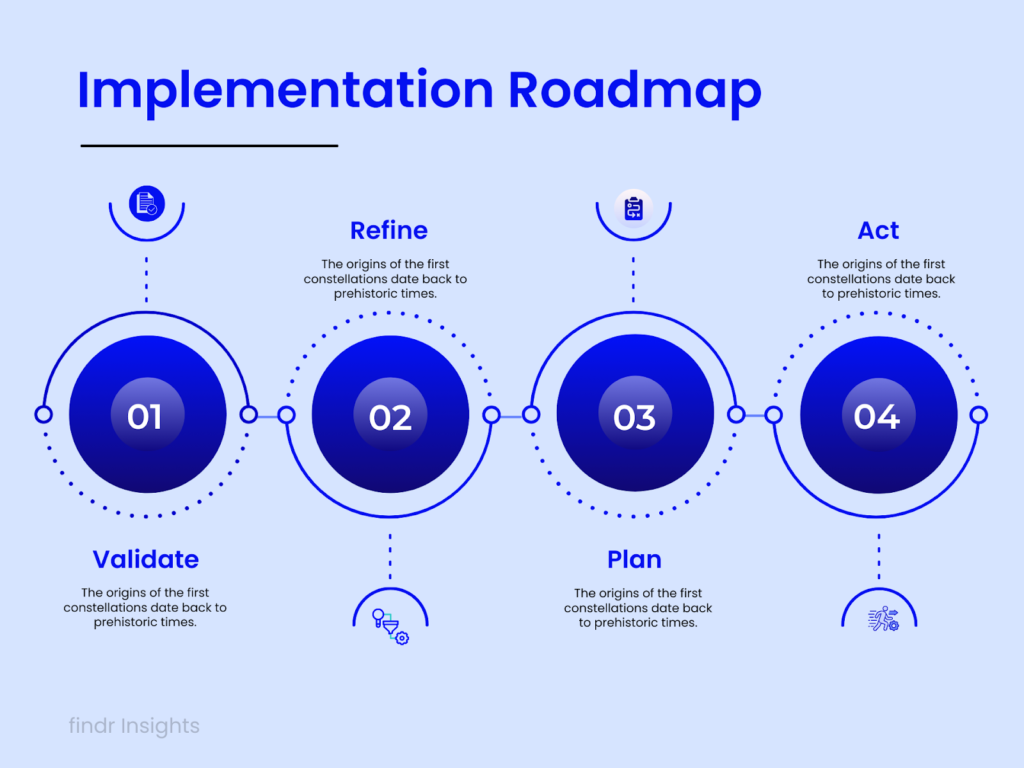
Step 1: Validate Your Idea
Before investing your savings or building a prototype, determine whether anyone truly wants your solution. Validation isn’t about asking friends if they “like” your idea. It’s about observing actual customer behavior.
Start by speaking with people who experience the problem you aim to solve. Ask open-ended questions about their biggest frustrations and current approaches.
When Dropbox’s founders wanted to test demand for cloud storage, they didn’t build the product first. They created a short demo video. The response was overwhelming, providing the feedback and confidence needed to develop the product thoroughly.
Quick Validation Methods:
- Create a landing page and measure sign-ups
- Offer pre-orders before building anything
- Run small surveys with your target audience
- Post concept videos or mockups for feedback
- Test messaging in online communities where your customers gather
Step 2: Refine the Concept
Once you’ve validated your business idea, it’s time to refine it. Refining involves narrowing your focus, clarifying your unique angle, and making your offer easy to understand.
Airbnb didn’t start as the global platform it is today. It began as a small experiment to help the founders pay rent by hosting a few guests on air mattresses.
They learned what worked and what didn’t. The airbeds weren’t appealing to all visitors, so this feedback shaped what Airbnb eventually became.
Refining your concept is iterative. Concentrate on a single audience and one primary promise. Define how you’ll generate revenue and estimate the cost of delivering value. Each adjustment should make the idea more transparent and easier to communicate, both to customers and yourself.
Step 3: Create a Simple Plan
A business plan doesn’t need to be a 40-page document. In the early stages, the best ones often fit on a single page. The goal isn’t perfection. It’s clarity.
Start by defining what success looks like in the next six to twelve months. Is it ten paying customers, a working prototype, or your first media mention? Then outline the specific steps that will get you there, keeping each milestone small, measurable, and achievable.
When Glossier’s founders began, they didn’t launch with hundreds of products. They started with one, a moisturizer, and a focused plan to build a community around authentic beauty conversations. That alone helped them move quickly and learn what resonated.
Your plan should work the same way. Define your minimum viable product (MVP), allocate time and money deliberately, and set a realistic launch timeline. Remember, the plan is a tool to create progress, not the finish line itself.
Step 4: Take Action
Taking action doesn’t mean leaping blindly. It means starting small but starting immediately. Register your business name, create a landing page, reach out to your first potential customer, or build a simple prototype. Each small step builds momentum.
When Melanie Perkins founded Canva, she didn’t begin with a billion-dollar platform. She started with a simple goal: to make school yearbook layouts easier.
She tested it with students, gathered feedback, refined the concept, and expanded from there. Her first version wasn’t perfect, but it moved forward, which made all the difference.
You can constantly adjust as you progress. No plan survives its first encounter with the real world unchanged. The entrepreneurs who succeed aren’t those who get everything right at once but those who keep moving, learning, and improving.
Common Misconceptions About Business Ideas
Before you move forward, let’s address some myths that might be holding you back. When people talk about business ideas, myths spread faster than facts. Some come from movies, others from social media, and many from well-meaning advice passed down by people who’ve never actually built a business.
Myth 1: “It needs to be completely original.”
One of the most common misconceptions is believing your idea must be revolutionary, something the world has never seen. In reality, originality is overrated. Most successful businesses didn’t invent their industries. They reinvented how those industries worked.
Netflix didn’t invent movies or even rentals. It improved how people accessed them. The company noticed that late fees and in-store visits frustrated customers and built a system to eliminate both. The same principle applies to Starbucks, which didn’t invent coffee but elevated it into an experience.
Innovation rarely comes from starting over. It comes from making something familiar better. Instead of asking, “Has this been done before?” ask, “Can this be done better?”
Myth 2: “I need a perfect idea before starting.”
Perfection is the silent killer of progress. Many aspiring founders wait for the flawless idea, the one that feels certain to succeed, but that moment never arrives. Ideas evolve only after they’ve been tested in the real world.
When Twitter first launched, it wasn’t the social media giant we know today. It was just a side project from a podcasting company. The idea changed shape entirely because users found a new way to use it.
The same happened with Slack, which began as an internal communication tool for a gaming company that ultimately failed. Their “perfect” game flopped, but the imperfect idea behind their team chat software became their success story.
Waiting for perfection is like waiting for the weather to be just right before setting sail. You’ll never leave the dock. A better question is, “What can I start testing today?”
Myth 3: “Great ideas guarantee success.”
This sounds logical, but it couldn’t be further from the truth. Great ideas don’t build great businesses. Execution does.
According to Harvard Business School research, execution accounts for roughly 85% of startup success, while the initial idea contributes only 15%. The startup world’s graveyard is filled with brilliant ideas that couldn’t survive poor timing, weak management, or a lack of focus.
MySpace had the right idea about social connection, but lost to Facebook’s better execution. BlackBerry pioneered mobile communication but failed to evolve its user experience fast enough.
Execution is the great equalizer. A mediocre idea executed with focus, speed, and adaptability often outperforms a brilliant one that never leaves the whiteboard. What you do with your idea when things get messy matters more than the idea itself.
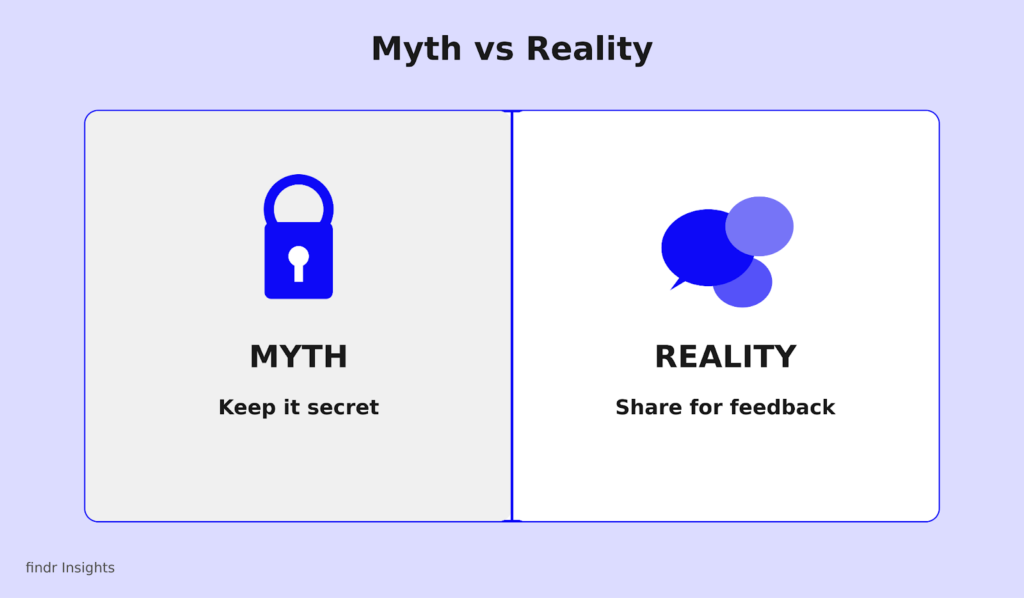
Myth 4: “I should keep my idea secret.”
This comes from fear, the worry that someone will “steal” your idea if you talk about it. Ideas alone aren’t worth much. Everyone has them, but few act on them. Sharing your concept early doesn’t weaken it. It makes it better.
When Airbnb’s founders started, they told almost everyone who would listen about their concept. Most people thought it was ridiculous. But those conversations helped them refine the model, address safety concerns, and build trust systems that made the idea viable.
Feedback is free validation. Talking about your idea exposes blind spots you might miss and attracts allies who can help you grow faster. Keeping it secret might protect your ego, but it slows your progress.
When NOT to Pursue Your Business Idea
Not every idea deserves your time and resources. Sometimes the most intelligent decision is to walk away or pivot to something better. Here are clear signals that your idea might not be worth pursuing:
You can’t find paying customers after 6+ months of genuine effort. If people consistently say they love your idea but won’t pay for it, you don’t have a business. You have a hobby.
The market is too small to sustain profitability. If only 1,000 people globally would buy your product, and half already have a solution they like, the math doesn’t work.
You personally don’t care about the problem. Building a business requires years of sustained effort. If you’re only chasing money without a genuine interest in the issue, you’ll burn out before you succeed.
The timing is wrong. Sometimes great ideas arrive too early (Google Glass) or too late (launching a DVD rental service in 2024). Market readiness matters.
Legal or regulatory barriers are insurmountable. Some ideas face regulatory hurdles that would take years and millions to overcome. Unless you have those resources, pivot.
Recognizing when to move on isn’t failure. It’s wisdom. The entrepreneurs who succeed know when to persist and when to redirect their energy toward better opportunities.
Conclusion
Every successful business begins with one thing: an idea that solves a real problem for real people. But a business idea isn’t just a spark of creativity. It’s a concept that connects a need, a customer, and a way to deliver value profitably.
The entrepreneurs who thrive aren’t those with the most original ideas, but those who act, test, and adapt. They listen more than they assume, treat validation as a compass, and use execution to drive that idea to feasibility. Most importantly, they start small because momentum, not perfection, turns concepts into major companies.
If you’re wondering where to begin, remember that your idea doesn’t need to change the world. It just needs to make someone’s day easier, faster, or better. The rest will follow.
Frequently Asked Questions
How do I know if my business idea is good?
You’ll know your idea has potential when people beyond your friends or family express genuine interest, ideally by paying, signing up, or asking for updates. Look for signs of real demand, not just polite encouragement. A “good” idea is one that consistently solves a problem someone is willing to pay for.
Do I need money to start testing a business idea?
Not necessarily. Many ideas can be tested with minimal cost through surveys, landing pages, prototypes, or pre-orders. The goal is to confirm interest before investing heavily. If people engage, you can then justify spending more to build your first version.
What if someone steals my business idea?
Ideas are easy to copy, but execution isn’t. What makes your business harder to replicate is the brand, unique selling point, relationships, and customer experience you build over time. Besides, sharing your idea early often attracts valuable feedback and support you wouldn’t get otherwise.
How long should I test my idea before giving up?
Give yourself at least 3-6 months of genuine, focused effort. If you’re not seeing any traction, paying customers, or positive signals after that period, it’s time to either pivot significantly or move on to a different opportunity.
I want to start a business, but don’t know what yet. Where should I begin?
Start with observation. Pay attention to frustrations in your daily life, at work, or in your community. The best business ideas often come from noticing what’s broken and imagining a better way to fix it.